










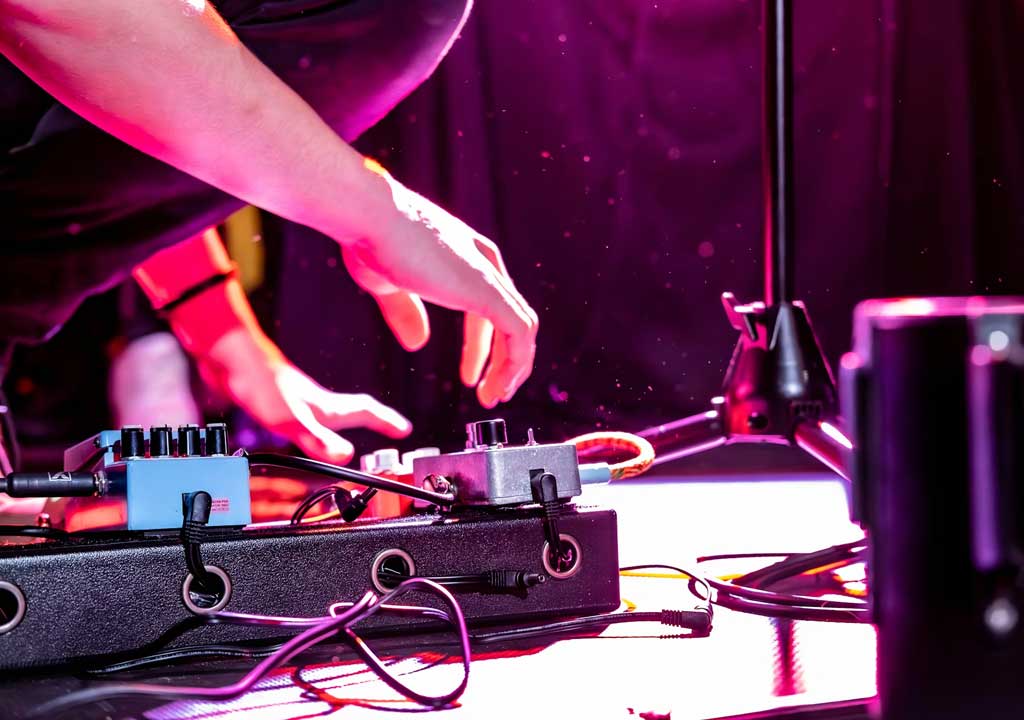


Pedalboard Layouts That Shape Your Core Tone

Pedalboard Layouts That Shape Your Core Tone
When players talk about tone, they often point to "the pedals" as if each box operates in isolation. In reality, your core tone is forged not just by the individual effects you own but by how you arrange them, how you power them, and how the signal travels from guitar to amp. A thoughtful pedalboard layout doesn't simply organize pedals; it orchestrates their interactions. Subtle decisions-where a compressor sits, how long your cables run, whether you buffer after a long chain-can transform edge into sparkle, mud into clarity, and a generic guitar voice into a signature core tone. This article digs into the physics, the practical layouts, and the mindset you can adopt to shape your core tone through layout.
The Core Idea: How Layout Shapes Tone
Your guitar signal is delicate and precious. It leaves the pickup high-impedance and relatively fragile, and it travels through a chain of pedals with varying input impedances, gains, and buffering schemes. The result is a vivid conversation between devices: a compressor can flatten dynamics and reveal sustain; a drive pedal can push the preamp into a new harmonic space; a buffer can preserve brightness that long cables otherwise bleed away; a reverb can wash a tone into space or dull it into mud, depending on where it sits in the chain. The layout you choose sets the stage for these interactions to either collaborate or clash.
Two core ideas govern most effective layouts:
1) Impedance and buffering matter. A high-quality buffer at the right point can preserve treble and transients over long cables or numerous pedals. If you're using a long board or several true-bypass pedals, consider where buffering is placed to keep your tone articulate.
2) The order of effects shapes how each pedal interacts with the ones after it. A pedal after a distortion can push or clip differently than a pedal before it. Dynamic pedals (compressors, transient shapers) often set the canvas for your gain stages; modulation and time-based effects then either sit on top of that canvas or sculpt the texture after the primary tone is formed. The same chordal content can emerge with a completely different character depending on where you place these effects in the chain.
Beyond the electronics, physical layout influences playing feel and consistency. A tidy board with logical spacing reduces accidental pedal presses during live playing, minimizes cable noise, and makes routine maintenance easier. When you're chasing a core tone, the go-to move is to establish a baseline chain, listen for where it loses note attack or gains muddiness, then adjust the order, buffering, and power to preserve the fundamental voice you're after.
Ordering Your Pedals: A Practical Guide
There is not one universal "correct" order for every guitarist, but there are proven patterns that reliably yield a clear, musical core tone. The standard framework below is a strong starting point for most rigs. You can adapt it to taste, but make sure to test changes methodically so you can hear what each modification contributes or subtracts from your core voice.
Standard order (most players start here):
1) Tuner or tuner/looper path at the very beginning to avoid calibration issues and ensure the tuning reference stays pristine.
2) Dynamics: compressor and/or envelope filter.
3) Gain/Preamp: overdrive, distortion, or fuzz pedals.
4) EQ or tone shaping before the time-based effects, if you like to sculpt the core before modulation.
5) Modulation: chorus, phaser, flanger, tremolo.
6) Time-based: delay.
7) Reverb (sometimes placed after delay to create a sense of space, though some players prefer reverb before delay for different echo interactions).
8) Amp or amp sim (or a dedicated output to your amp) and any ground-lift or final buffer as needed.
The key idea is to give the core signal the most unadulterated presence early on, then add texture and space later in the chain. For many players, this means keeping dynamics and gain stages grouped together, then adding modulation and time-based effects as a second tier that can be dialed in without wounding the core tone.
How you use this baseline will depend on what you want your core tone to do. Here are a few common scenarios and how layout choices amplify or tame the outcome:
- Clean, glassy tones with edge: place a compressor early to tame dynamics, then drive only sparingly with a light OD, followed by modulation and delay. Keep the high end bright by using a buffer after the long chain or by carefully choosing cables and jacks.
- Rich, saturated drive with texture: push the OD/Distortion stage first, then consider a boost after it to push into a hotter saturation. Place modulation after the gain to preserve your harmonic content, and put the delay before reverb to retain clarity in repeats.
- Ambient, dreamy sounds: you might emphasize modulation and reverb, but to keep the core voice intact, place a preamp-style pedal before time-based effects and ensure a buffer keeps the signal from thinning as the chain grows longer.
Two Practical Layout Templates You Can Start With
Template A: The Classic Clean-to-Saturated Flow
Guitar > Tuner > Compressor > Clean drive or light OD > EQ (pre-amp shaping) > Modulation (Chorus/Phaser) > Delays > Reverb > Amp/DI
Why this works: The compressor sits early to tame dynamics, the clean drive gives you a transparent push if you want to pull more gain from your amp, and EQ ahead of time lets you sculpt tone before you hit modulation. Modulation sits before time-based effects so the modulation's character becomes the train the delay and reverb ride on, rather than the delays washing out raw harmonic content. This layout tends to preserve note clarity and allows you to push your amp harder for harmonic richness while keeping the core voice intact.
Template B: The Saturated, Texture-First Approach
Guitar > Tuner > Boost (to push the front end) > OD/Dist/Fuzz > Buffer if needed > Modulation > Delay > Reverb > Amp/DI
Why this works: A boost before the drive is a powerful way to illuminate harmonic content and edge. Keeping a buffer after the gain-friendly section helps maintain brightness when you're stacking multiple effects. Placing modulation before delay can yield lush, beating textures that retain core tone while painting the atmosphere. If you're chasing a thick, wall-of-sound characteristic, this route gives you that, while still letting your guitar's core voice shine through.
Notes on these templates:
- If your pedal lineup includes a lot of long cables or many true-bypass pedals, consider adding a dedicated buffer pedal near the front or after the modulation stage to preserve treble and transient response.
- The order of modulation and drive is not inviolable; some players prefer to place modulation before gain to bend the raw tone before distortion, especially with fuzz. Experiment and listen for which arrangement yields the most musical interactions with your amplifier.
- The treatment of delay and reverb is especially tonal. If you want a more immediate, present space, place delay before reverb. If you want a bigger, more ethereal wash, place reverb ahead of delay in the chain.
Physical and Electrical Considerations: How the Board Feels and Sounds
Layout is not only about the order in which pedals sit; it's also about how physically and electrically the board behaves. A few practical considerations can materially affect your core tone:
1) Cable length and quality. Longer cables can roll off high frequencies and dull transients. Use shorter patch cables where possible, especially in the front rows, and keep power cables separate from audio signal lines to minimize hum and crosstalk.
2) Buffers and true bypass. A mix of true bypass and buffered pedals is common. If you have many true-bypass pedals, a dedicated buffer at the front of the chain can help retain top-end brightness; if you rely on a robust buffer pedal, place it where it won't be overwhelmed by the drive stage ahead of it.
3) Power supply layout. Isolated outputs reduce noise coupling between pedals. Make sure your power supply can deliver the current required by high-draw pedals (especially delays and digital drives) and that quiet, clean power is distributed to the signal chain.
4) Grounding and hum reduction. Keep power and audio cables organized and, if possible, use a star-ground arrangement or isolated grounds for sensitive pedals to minimize ground loops.
5) Pedal accessibility. Position frequently adjusted controls (tuner, boost, OD gain, and experimental modulation) within easy reach. A board that forces you to search or squeeze to reach a knob can affect how you interact with your core tone in live situations.
These details might seem technical, but they are the practical levers that keep your core voice intact as you perform, rehearse, or record. A well-laid board yields consistent tone across venues, rooms, and guitar setups, which is a lot closer to "your core tone" than any one pedal alone could provide.
Developing a layout that truly serves your core tone is an iterative process. Here's a straightforward method you can apply on a weekend or during a tour break:
1) Establish a baseline. Wire your board in a conventional order (for example Template A) and dial in a neutral tone with a clean, simple guitar patch. Record a short snippet or take notes on what you hear. 2) Swap one variable at a time. Try moving a pedal a position, adding/removing a buffer, or changing the order of just two pedals, and listen for what changes. 3) Quantify the change. Is the core tone clearer, creamier, more dynamic, or more congested? Write notes or label the board so you can recall what each configuration does. 4) Build a personal "tone map." Create a short cheat sheet describing your preferred chain and the exact pedals that define your core voice. 5) Test across different guitars and amps. Your core tone should remain recognizable even when you change to a different guitar with a different pickup configuration, and you should have confidence that you can reproduce it on another amp or with a DI. 6) Revisit after a few weeks. Your playing style may evolve, and so might your sense of what constitutes your core tone. A layout that served you in one season might get in the way in the next; be willing to adjust as your music changes.
Case Studies: How Three Players Use Layout to Shape Core Tone
Case Study 1: The Blues Player who Values Bite and Bloom
This guitarist loves a bright, responsive clean tone with a hint of glassy edge when pushed. They place a compressor early to tame dynamics, then a light OD to push the preamp just enough. A pre-gain EQ helps sculpt the midrange for singing blues bends. Modulation sits after the gain but before delay, yielding a lush but non-muddy texture. The result is a core tone that remains glassy at clean settings but blooms with a touch of hair when playing sustained notes. The power supply is isolated, and a small buffer at the front ensures the chain stays bright on longer gigs.
Case Study 2: The Shoegazer who Wants Infinite Depth
This artist uses a high-sustain, almost wind-like wash with cascading delays and reverbs. They route a boost before OD to get a pushing crunch, then add modulation after dynamics to create a shimmering bed. A generous amount of delay is placed before reverb to preserve repeats and keep the tail clear, with a looping or tap function to layer textures. The buffer placement is strategic to preserve treble through a long chain, and patch cables are kept short to minimize noise. The core voice remains open and musical, even as the board layers volume and space into expansive textures.
Case Study 3: The Modern Rock Player who Wants Punch and Precision
This player needs a strong, defined core tone that can cut through a dense mix. They use a front-end booster to push the drive stage, then a transparent OD and a robust EQ stage to keep the midrange tight. Modulation is used sparingly to avoid clouding the attack, and delay is kept tighter with a small, defined repeat. The result is a core tone that remains tight and articulate on stage, with enough presence to sit atop a full-band mix. A dedicated power supply with ample headroom keeps noise low, even at high gain.
Common Myths and Pitfalls: What to Avoid When Designing Your Layout
Myth 1: Pedal order doesn't matter. Reality: Small changes in order can dramatically change how the same two pedals interact. Don't assume the same arrangement works for every patch-test and listen.
Myth 2: Buffers ruin tone. Reality: A well-placed buffer can preserve tone across a long board or after many pedals. The key is to place buffering where it preserves the maximum high-end and transients without introducing artificial brightness.
Myth 3: The most pedals equals the best tone. Quality, not quantity, shapes your core tone. A crowded board with noisy power will degrade tone; a lean, well-powered setup often yields cleaner, more musical results.
Myth 4: You should never deviate from classic order. Reality: Many players intentionally rearrange the chain to coax unique interactions, particularly when experimenting with envelope, fuzz, or dynamic pedals. Your core voice may require a non-traditional layout to achieve the effect you're after.
Practical Tips to Fine-Tune Your Core Tone Through Layout
- Start with a clean slate: Remove all pedals from the board, then add them back in the order you think is best. Listen to the core voice at each addition.
- Label pedals and rough-draft positions. A quick sketch can save you time in live settings and help you maintain consistency.
- Use transparent or mild gain pedals for the heart of your tone; reserve heavy, high-gain devices for occasional use.
- Because tone travels through the chain, consider the signal path and impedance at the point each pedal is connected. If a pedal sounds dull after several others, try inserting a buffer or moving that pedal earlier in the chain.
- Don't neglect the front-end: a good tuner is essential and should rarely be buried; it ensures the baseline is solid and helps you focus on tone rather than tuning.
- If you're chasing stereo or ambient effects, plan a distinct path for modulation and delays, so your core tone remains stable in the main path while the effects breathe in a parallel or alternate route.
What to Do When You're Touring or Switching Guitars
On the road or when swapping guitars, your core tone can drift due to pickup changes, wood resonance, and scale length interactions with your pedal chain. A few quick adjustments can preserve your core voice:
- Keep a compact, repeatable board profile. A smaller board forces you to think about essential pedals and reduces variables.
- Use a consistent power setup. Isolated outputs or a reliable power brick help tame ground loops and ensure consistent tone across venues.
- Create a "tone snapshot" for each guitar. Save a pair of settings (drive level, EQ, and modulation depth) to quickly dial in a baseline tone that matches your core voice regardless of guitar.
- If possible, keep a dedicated front-end buffer and a small preamp or clean boost so you can adjust the core dynamics without reconfiguring the entire chain.
The Mindset: Treat Your Pedalboard as an Extension of Your Guitar's Core Voice
The most important takeaway is that a pedalboard is not just a toolbox of effects; it is an extension of your guitar's voice. The core tone you seek is the result of a cohesive, well-judged signal path that respects the physics of the signal while enabling expressive performance. Your mindset should be:
- Listen closely to what each change does to the attack, sustain, brightness, and space of your tone.
- Favor simplicity and repeatability. An elegant, repeatable chain gives you confidence on stage and in the studio.
- Prioritize the core voice over the "latest hype" in pedals. A well-chosen layout that serves your tone will outperform a flashy but mismatched setup.
- Document what works. A tone map or quick-reference notes keep your board consistent, even when you're experimenting with new gear.
Conclusion: Shape Your Core Tone with Intent
Pedalboard layout is a powerful, practical tool for sculpting your core tone. By understanding how impedance, buffering, and the order of effects influence the signal, you can craft a voice that remains coherent across gigs, studios, and different guitars. Use the practical templates as launch points, but listen deeply as you experiment. Small changes in order, buffering, or power can unlock a clearer, more dynamic core tone-the tone you'll recognize as yours, even when you share the stage with other players. The real artistry lies not in collecting pedals, but in arranging them with intention, discipline, and a curious ear. Your core tone awaits your layout decisions. Start with a solid baseline, test methodically, and let the board become a natural extension of your playing.
LIKED THIS ARTICLE? SHARE IT: